
Today, on Redhead Mom, I’m sharing a partnered guest post about Makarska Riviera for Active Beach Holidays.
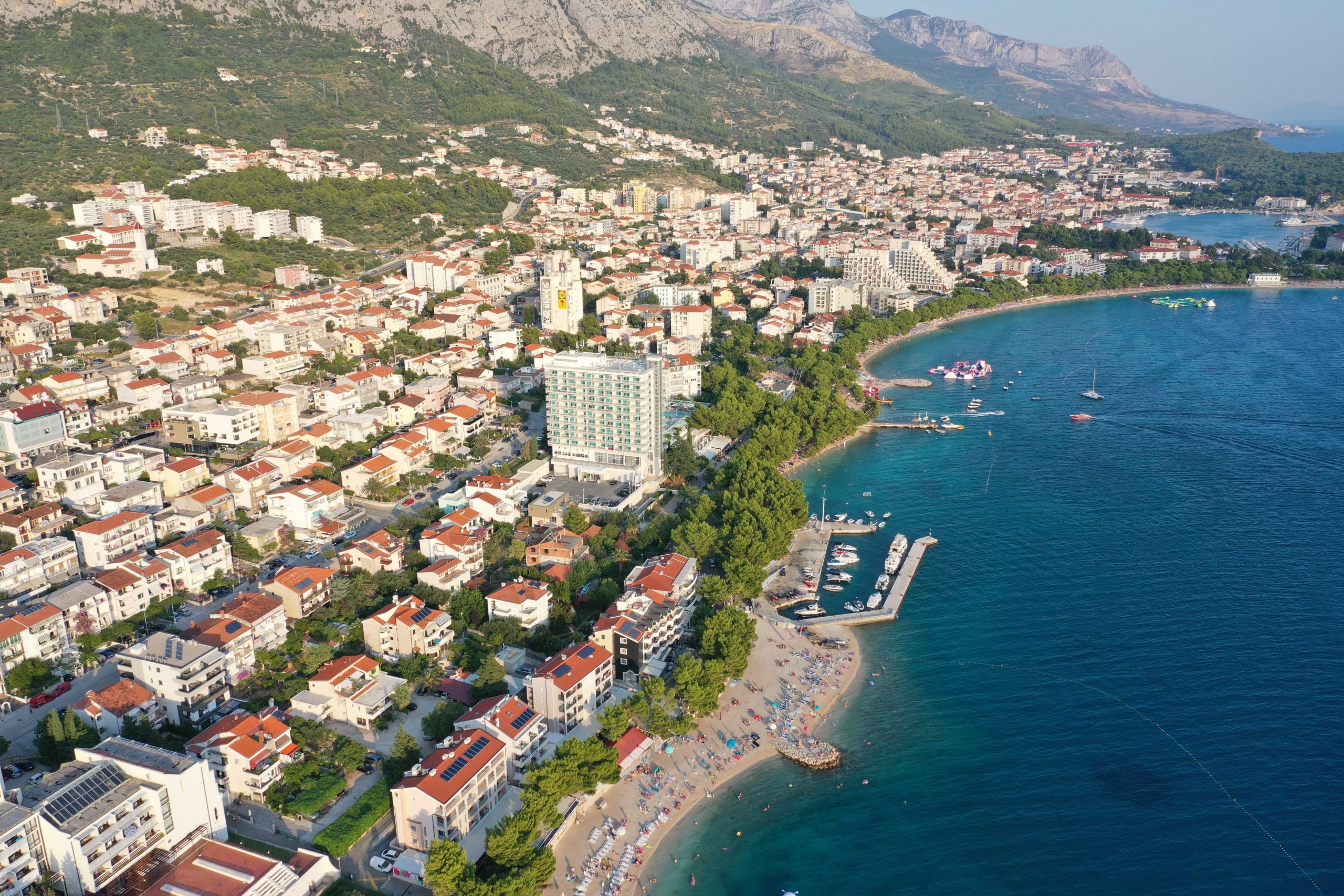
What makes the Makarska Riviera different from the better-known destinations along Croatia’s Dalmatian coast? It’s not the medieval walls of Dubrovnik or the lively nightlife of Hvar that define this stretch of coastline. Instead, the Makarska Riviera is known for dramatic scenery, where the Biokovo Mountains rise steeply above the Adriatic, small white pebble beaches replace long sandy shores, and crystal-clear blue water creates an unforgettable setting.
For families, that combination offers something especially appealing. It’s a destination where relaxing by the sea goes hand in hand with outdoor adventures, charming coastal towns, and activities for all ages, making it easy to enjoy a beach holiday that’s as active or as laid-back as you want it to be.
The Mountain Behind the Beach
Biokovo is the thing that changes the Makarska Riviera from a pleasant Adriatic holiday into something more. The mountain rises to 1,762 metres directly above the coast, the second highest peak in Croatia, and most of its southern face is protected as a nature park. The Croatian Ministry of Environment and Nature Protection lists Biokovo Nature Park as covering 196 square kilometres of karst terrain, Mediterranean scrub, and endemic plant species found nowhere else in the world.
The Skywalk, a glass-bottomed viewing platform cantilevered over the edge of a cliff at around 1,200 metres, has become one of the most visited points in the park. What it doesn’t prepare you for is the scale of what you can see from up there: the Riviera coast below, the islands of Hvar and Brač in the middle distance, and on a clear morning, the Italian Apennines faint on the horizon.
Access from the coast is possible by road from Makarska or by one of the marked walking trails. The trails vary considerably in difficulty, the more serious routes genuinely require proper footwear and a full day, and the park’s website details current conditions and permits.
What the Beaches Are Actually Like
The Riviera runs roughly 60 kilometres from Brela in the north to Gradac in the south, and the character changes as you move along it. Brela, at the northern end, is probably the most photographed single beach in Dalmatia, a pine-fringed pebble cove where a single rock stands in shallow turquoise water and ends up in almost every aerial shot of the Croatian coast. It’s small and it fills up in August, but outside peak weeks it’s genuinely beautiful in the quiet, unhurried way that travel photographs suggest and reality rarely delivers.
Makarska town sits roughly in the middle and offers the most infrastructure: restaurants, a port from which boats leave for the islands, a Saturday market, and a long waterfront promenade that gets used seriously in the evenings. Tučepi, a short distance south, is where many families with children end up staying because the beach is wider than most along the Riviera and the water deepens gradually.
Further south, Gradac and Zaostrog are quieter still, with the kind of mix of fishing harbour and low-key tourist infrastructure that feels increasingly rare as central Dalmatia gets busier each summer.
The Boat Days
The islands visible from the Biokovo Skywalk are also reachable from Makarska by ferry or excursion boat. The Sumartin ferry on Brač runs year-round. Hvar town is a longer crossing but manageable as a full-day trip.
What most visitors discover is that the boat itself is often the point rather than the destination. Day excursions out of Makarska’s harbour typically combine several stops, a lagoon, a cave, an island village, a swimming spot, with a long lunch somewhere on the water. These trips run throughout summer and are the fastest way to access the coves and beaches that aren’t reachable by road.
Private boat hire, with or without a skipper, is available from the harbour for groups who want to choose their own route. The cost is meaningfully lower than in Split or Hvar and the boats tend to be less crowded on the water.
The Best Bases
Where you stay along the Riviera shapes the holiday in ways that take a day or two to understand. Makarska town is the most convenient for restaurants, nightlife, and the boat harbour, but it’s also the most crowded in peak season. Families often find that Tučepi or Baška Voda, a short drive north, gives them proximity to Makarska without being in the centre of it.
Brela suits quieter trips and those who want walking access to the park paths. Gradac at the southern end is for people who actively want fewer people around them and don’t mind that the restaurant options are limited.
Wherever you stay, the road along the Riviera is one of the better coastal drives in Croatia. The pines come close enough to the carriageway that you drive through shade rather than beside it, and the views appear and disappear around corners in a way that keeps the attention.
Getting There
Arrival is the one part of a Makarska holiday worth thinking through in advance. The Riviera has no airport of its own, so nearly everyone lands in Split and continues south, with the drive to Makarska usually taking well over an hour before summer traffic is factored in. The intercity bus is fine for light packers, but for families hauling beach gear, strollers, or diving equipment, the practical side of reaching the Makarska Riviera usually means a door-to-door ride that skips the extra hop between Split’s airport and its bus station.
When to Go
July and August are the peak, with accommodation at its most expensive and the beaches at their fullest. Late June and September are consistently recommended alternatives, the sea temperature barely differs, the crowds thin considerably, and the rates drop. May and October are for those who don’t need beach swimming as a given but want hiking conditions that are genuinely good rather than uncomfortably hot.
The Makarska Riviera recorded a 45% increase in tourist numbers in early 2026 compared to the same period in 2025, according to the Makarska Tourist Board. The pattern follows: the season keeps starting earlier, the numbers keep rising, and the window when the place feels genuinely unhurried keeps shrinking. Going in the shoulder months has gone from a tip to something closer to advice.
Conclusion
The Makarska Riviera is one of the places where the physical landscape does most of the work. The mountain behind the coast, the quality of the water in front of it, and the relative lack of built infrastructure between them create a holiday that genuinely rewards being active while also allowing the slower pace that a beach week is supposed to produce.
It’s a harder trip to photograph well than Dubrovnik or Hvar. The reward is that it doesn’t feel like a photograph.